The Delhi High Court was considering a Writ Petition filed by the CISF Constable against his dismissal from service on allegation that he had contracted a second marriage while his first marriage was subsisting.
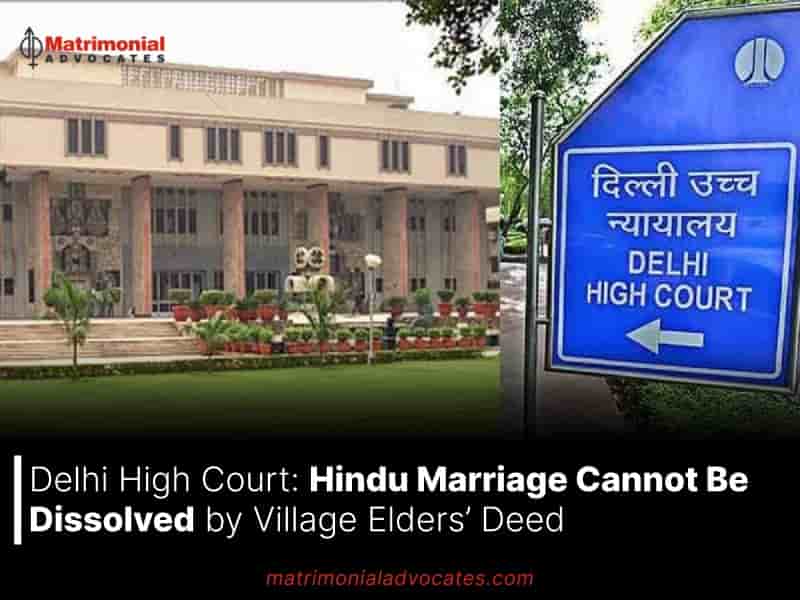
The Delhi High Court, upholding the dismissal of a CISF Constable for contracting a second marriage, observed that a Hindu marriage cannot be dissolved simply through a dissolution deed executed before village elders.
The ruling came in response to a writ petition filed by the constable challenging his termination, which was premised on the allegation that he had entered into a second marriage while his first marriage was still legally subsisting.
The Division Bench of Justice C. Hari Shankar and Justice Om Prakash Shukla observed, “On merits, there is no dispute about the fact that the petitioner contracted the second marriage while her husband’s first marriage was subsisting. The only contention advanced is that the first marriage had been dissolved by signing of a marriage dissolution deed before the persons of the village. We are unaware of any law or principle by which a duly solemnized Hindu marriage can be dissolved by signing a marriage dissolution deed in front of village persons.”
The Petitioner was represented by Advocate Shilpa Saini, while Special Public Prosecutor Farman Ali appeared on behalf of the Respondent.
Addressing the Petitioner’s contention that the first marriage had been dissolved by a dissolution deed dated October 15, 2017, executed before “social people and witnesses,” the Court held that a duly solemnized Hindu marriage cannot be dissolved in such a manner.
The Court further held that the case was directly covered by Rule 18 of the CISF Rules, which bars contracting a second marriage during service, as well as by the Division Bench judgment in Bazir Singh.
Accordingly, the Petition was dismissed.